
Mahjong Breeze - Tile Match
Passion Fruit JoyCasual
4.9338.00 Reviews
- Version
- 1.0.5
- Installs
- 500.00K
- Age Rating
- Everyone
Screenshots
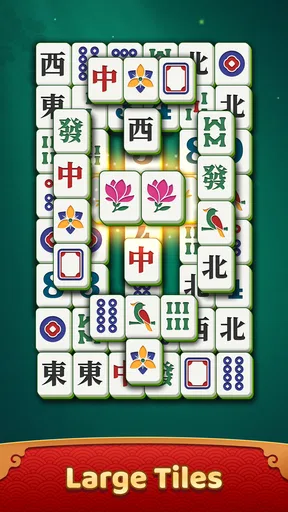
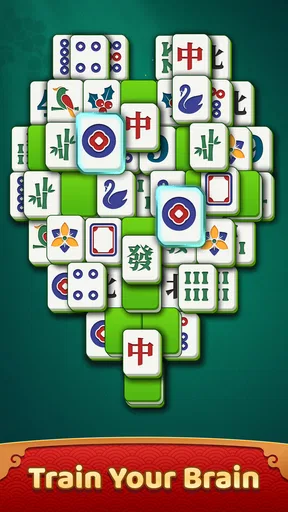
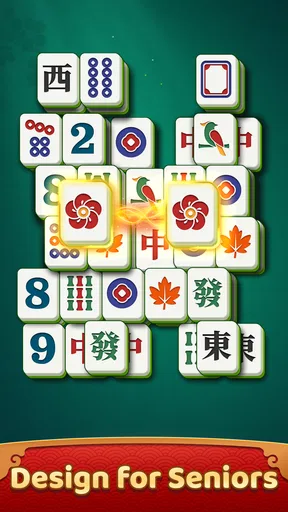
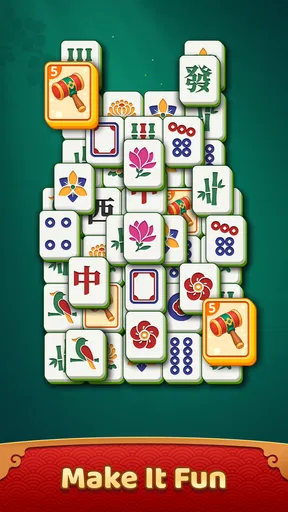
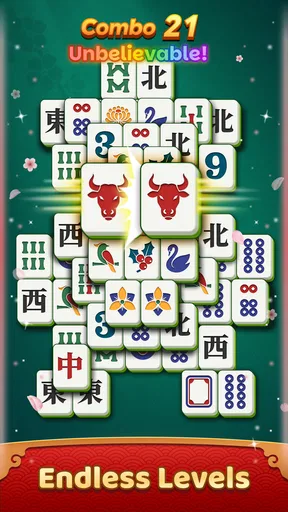
Our Review of Mahjong Breeze - Tile Match
 Analysis by Appyee
I found Mahjong Breeze - Tile Match to be the kind of casual game that succeeds by making a familiar puzzle feel calm rather than demanding. Its central appeal is easy to understand: match identical mahjong tiles, clear the board, and enjoy a quiet few minutes without having to learn a complicated system. After spending time with it, my main conclusion is that it works best as a gentle daily puzzle, not as a deep strategy game or a competitive challenge.
That distinction matters. Many tile-matching games try to keep players engaged with rapid rewards, busy screens, or increasingly aggressive difficulty. This one is aimed at a slower rhythm. The store summary presents it as a relaxing option for seniors, and I can see why: the familiar tile format, straightforward objective, and casual presentation make it approachable for players who want something readable and unhurried. It is also free and rated for Everyone, which makes it easy to try without turning the decision into a major commitment.
Why the simple matching format works
The strongest part of the experience is how quickly I could begin playing. There is no need to understand a long tutorial or memorize a complicated set of rules before the puzzle makes sense. I look for two matching tiles, select them, and continue working through the layout. That direct interaction is especially useful when I want a short mental break rather than a game that asks for sustained concentration.
Although the game uses mahjong tiles, I would not approach it as a full traditional mahjong adaptation. The attraction here is tile recognition and clearing patterns, not learning the rules of a multiplayer table game. That makes it a better fit for someone who enjoys visual sorting and matching than for a player searching for a competitive mahjong simulation. The distinction also makes the game less intimidating for a first-time player.
In everyday use, I can imagine opening it while waiting for an appointment, taking a short break between chores, or settling down for a few quiet minutes in the evening. The format is naturally suited to interrupted play because the goal is visible from the start. I do not need to prepare a strategy guide or remember a large set of controls. I can simply inspect the board and decide which pair looks useful next.
One practical tip is to resist matching the first obvious pair automatically. I get more value from scanning the surrounding tiles first and considering which matches might expose other choices. That small habit turns the game from pure tapping into a light exercise in planning. It is still relaxed, but I am paying attention to the order in which I clear the board. For older players or anyone rebuilding confidence with mobile games, this gives the experience a little more substance without making it stressful.
The visual nature of the puzzle is another reason it can work well for casual players. Matching symbols is more approachable than reading instructions or managing several menus. I would still recommend playing on a screen that is comfortable for your eyesight, because tile games depend on distinguishing designs quickly. A larger phone or tablet may be preferable for someone who finds small symbols tiring, even though the game itself is designed to be accessible.
Passion Fruit Joy keeps the identity of the game focused on the puzzle rather than on a large fictional world or a complicated progression system. That focus is a strength when I want a clean, uncomplicated diversion. It also means that players who need a strong narrative, character development, or a broad sense of adventure will probably find the experience modest.
A calmer alternative to faster puzzle games
Compared with match-three games, this feels less dependent on speed and chain reactions. Match-three titles often encourage quick decisions, special pieces, timers, or dramatic effects. Mahjong Breeze is better suited to deliberate observation. I can pause to inspect the board instead of reacting to a rapidly changing screen. That makes it a sensible alternative for people who find conventional arcade-style puzzle games overwhelming.
It also differs from word puzzles and number games in a useful way. Those alternatives ask me to retrieve vocabulary, calculate, or recognize patterns in text. Here, the task is primarily visual. Someone who enjoys arranging objects and spotting duplicates may find this more comfortable than a crossword or a number grid. On the other hand, players who want a strong learning component may get more from a dedicated word or logic game.
The game’s average rating is 4.9 from around 3.7 thousand ratings, while its review count is around 195. Those figures suggest that the basic experience has connected strongly with many players, but I would not treat a high score as proof that every type of player will enjoy it. A calm tile puzzle can receive enthusiastic feedback from its intended audience and still feel too simple to someone who wants complex systems. I see the rating as encouraging evidence of a clear audience fit rather than a reason to ignore personal preferences.
Its reach is also meaningful: it has passed 100 thousand installs. That gives me more confidence that it is not an obscure experiment with no audience, but popularity alone does not change the central trade-off. The game’s appeal comes from simplicity, and simplicity can feel refreshing or repetitive depending on what I expect from a mobile game.
The limitation I noticed after the first easy sessions
The main weakness is the same quality that makes the game approachable: the basic loop may not provide enough variety for players who need constant novelty. Matching tiles is pleasant, but the action itself is narrow. If I play for a long stretch, the lack of a more demanding layer may become noticeable. This is not a game I would choose when I want a dramatic sense of progress or a deep strategic challenge.
That limitation is important for families choosing an app for different age groups. A parent or grandparent looking for a quiet puzzle may appreciate the low-pressure format, while a teenager accustomed to fast games may lose interest quickly. I would also skip it if my priority were online competition, story-driven content, or a large collection of distinct game modes. A more feature-heavy puzzle title would be a better choice in those cases.
Another trade-off is that the relaxed pace does not automatically mean every session will feel effortless. A board can still require careful attention, particularly when I make an early match without considering what it reveals. The game is gentle, but it is not necessarily mindless. That is good for a player who wants mild concentration, though someone seeking a completely passive activity may prefer a visual relaxation app instead.
I also think expectations around the word “mahjong” need to be managed. If a friend asked me whether this teaches the traditional four-player game, I would say no: I would describe it as a casual tile-matching puzzle using mahjong-style pieces. That clarification prevents disappointment. Its value is in accessible matching, not in reproducing the strategy, scoring, or social structure of a traditional mahjong table.
Small habits that make the puzzle more enjoyable
I found three habits especially useful. First, I scan from the outside toward the center rather than staring at the whole board without a plan. Edge tiles are often easier to evaluate because they are less visually crowded. Second, I avoid spending every helpful match immediately if another pair could open more of the layout. Third, when I feel myself tapping too quickly, I pause for a moment and reassess the remaining options. These are simple techniques, but they make the game feel more thoughtful without changing its relaxed character.
For someone using the game as a short break, I would set a natural stopping point instead of treating every session as a long play period. The best use case is a handful of puzzles or a brief mental reset, especially if repetitive tapping starts to feel automatic. That approach preserves the game’s calming quality and avoids turning a light pastime into another source of screen fatigue.
The game can also work as a low-pressure introduction to mobile puzzles. I would recommend sitting with a less experienced player for the first session, not because the controls are complicated, but because showing how to identify and select matching tiles removes hesitation. After that, the player can develop their own rhythm. This makes it a reasonable choice for sharing a device with an older relative who wants something more interactive than watching videos but less demanding than a strategy game.
Who should install it, and who should look elsewhere
I think the best audience is made up of players who value clarity, calm pacing, and a familiar visual puzzle. It is particularly suitable for seniors who enjoy matching activities, casual players who want a free game for short sessions, and anyone who prefers observation over fast reflexes. The Everyone age rating also makes the presentation broadly approachable for households looking for a simple puzzle rather than mature subject matter.
I would recommend it to a friend who says, “I want something relaxing that I can understand immediately.” I would not recommend it to the friend who says, “I need a game that keeps surprising me with new mechanics.” For that second player, a richer puzzle game with evolving rules or stronger progression would probably offer better long-term satisfaction.
The technical requirements are modest enough to make the game accessible to users with older compatible devices. It supports Android 8.0 and later, and the current version is 1.0.4. That makes it worth checking on a device that is not new, particularly if the owner wants a lightweight casual game rather than a demanding modern release. I would still make sure the device is updated and that the screen is large enough for comfortable tile recognition.
Because it is free, the entry decision is straightforward. I can try it without paying first, which suits a game whose appeal depends heavily on whether I enjoy its quiet pace. The absence of a purchase barrier does not make the game automatically right for everyone, but it does make experimentation easy. If the first few sessions feel soothing, it has earned a place among my occasional puzzle apps; if they feel repetitive, I have learned that quickly without making a costly commitment.
My final view after weighing the trade-offs
Mahjong Breeze - Tile Match is a focused casual game with a clear purpose: give players a calm way to match tiles and exercise light visual attention. I appreciate that it does not pretend to be a full mahjong simulation or a high-intensity puzzle adventure. Its strongest evidence is the approachable loop, the broad age rating, the free price, and the strong response from its existing audience.
My reservation is equally clear. The game’s narrow format may not hold the attention of players who want deep strategy, competition, storytelling, or constant mechanical change. Its relaxed design should be treated as the main feature, not as a promise of endless variety. I would choose it for a quiet pause, a gentle introduction to mobile puzzles, or a shared game for someone who prefers simple visual tasks.
Passion Fruit Joy has made something that is easy to pick up and easy to explain. That is not a small achievement in a crowded casual category, even if it also defines the game’s limits. My recommendation is simple: choose it when peaceful tile matching is exactly what you want, and skip it when you are searching for a full traditional mahjong experience or a more ambitious puzzle system.
Verdict
Strengths of Mahjong Breeze - Tile Match
- Relaxing gameplay suitable for short breaks or longer sessions.
- Simple tile-matching rules make it easy for beginners to learn.
- Multiple levels provide a steady sense of progression.
- Offline play is convenient when an internet connection is unavailable.
- Lightweight design runs smoothly on many Android and iOS devices.
Limitations of Mahjong Breeze - Tile Match
- Some puzzles may feel repetitive after extended play.
- Later levels can become difficult without careful planning.
- Hints or extra moves may be limited during challenging boards.
- Ads can interrupt the flow between levels or gameplay sessions.
- Players seeking competitive multiplayer may find the experience too solitary.
Other Releases by Passion Fruit Joy
View All
Ball Sort Magic: Color Puzzle
Casual4.8
Similar Picks in This Category
View All
My Talking Angela
Outfit7 Limited4.2

My Talking Tom
Outfit7 Limited4.3

Pou
Zakeh4.2

My Talking Tom 2: Pet Game
Outfit7 Limited4.3

Candy Crush Saga
King4.6

Bridge Race
Supersonic Studios LTD4.1
Frequently Asked Questions
What is Mahjong Breeze - Tile Match, and how is it played?
Mahjong Breeze - Tile Match is a casual puzzle game based on the classic mahjong solitaire format. The objective is to clear the board by matching identical, free tiles in pairs. A tile is generally available when it is not covered and has an open side. The game focuses on observation, planning, and relaxed progression rather than real-time competition.
Is Mahjong Breeze - Tile Match suitable for beginners?
Yes, the game is generally approachable for beginners because its core rules are simple to understand: find matching pairs and remove them from the layout. Early boards typically provide a gentle introduction, while later arrangements require more careful planning. New players should pay attention to blocked tiles and avoid removing pairs randomly, since one careless move can reduce the number of useful options.
Can Mahjong Breeze - Tile Match be played offline?
Many tile-matching games can be played without a continuous internet connection, which makes them convenient for travel or short breaks. However, certain features may still require access to the internet, including advertisements, analytics, cloud synchronization, updates, or online events. Before relying on offline play, it is advisable to test the game after temporarily disabling your connection.
Does Mahjong Breeze - Tile Match contain advertisements or in-app purchases?
The game may use advertising and optional in-app purchases as part of its monetization model. Advertisements can appear between levels or when players request helpful features, while purchases may offer benefits such as removing ads, obtaining hints, or receiving additional resources. Check the store listing and the payment settings on your device before downloading, especially if children will use the app.
What should I check before downloading Mahjong Breeze - Tile Match?
Before installing Mahjong Breeze - Tile Match, check that your Android or iOS device meets the listed operating-system requirements and has enough available storage. It is also worth reviewing recent user feedback, the developer’s privacy information, permissions, advertising policy, and whether progress can be synchronized. These details can affect performance, data use, and how easily your game progress is recovered after changing devices.
Play our best games!


